Western Kingdoms of Alltyyr — Part 2

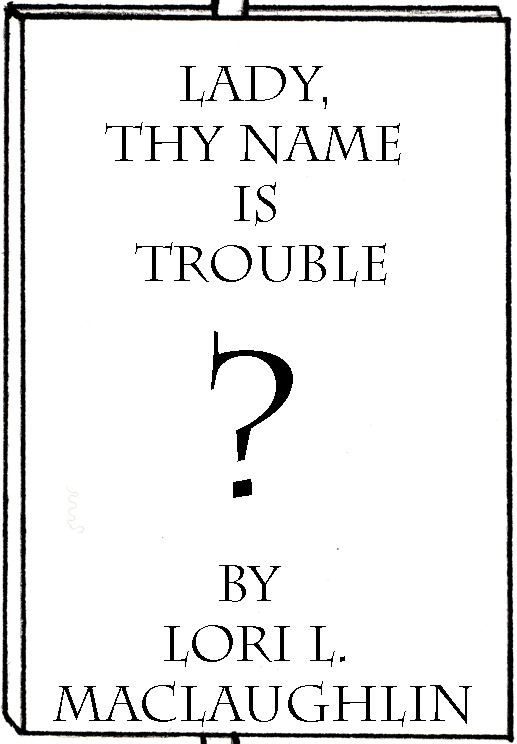
A few weeks ago, I wrote about four of the Western Kingdoms in my fictional world of Alltyyr from Book I: Lady, Thy Name Is Trouble. Eight kingdoms comprise this part of the realm: Barony, Faragellyn, Dhanarra, Sulledor, Mardainn, Jendairin, Tralyxa, and Clair. The earlier post covered the first four. You can read about them here. This week I’ll get into the last four.

Directly south of Dhanarra and Faragellyn, lies Mardainn. Mardainn’s expansive borders encompass a wide section of the Scarlet Mountains to the west and the deadly Bog to the east. Mines rich with ore and gemstones riddle the mountains. Metalworkers in the various mining towns use the ore to craft weapons, tools, and farm implements to trade, along with jewelry made with the gems, for needed products from the other kingdoms. Ziiracan blades are said to be the best weapons the Western Kingdoms have to offer. Many of the mines were originally parts of Dwarven strongholds belonging to the two races of Dwarves that once lived in the Scarlet Mountains, before a terrible war between them wiped out every last one. Over the years, periodic earthquakes have claimed some of the mines, taking a heavy toll in the work force, but the greed of the mine owners ensures that new mines will be opened to keep the flow of ore and gems steady, whatever the cost.

Near the center of the kingdom, Mardainn’s capital city of Desta straddles the great Amberin River, the main north-south trade route through the Western Kingdoms. Just south of the city, the river sweeps into a towering two-tier cataract, its lower tier a hundred-foot drop to the beaten rocks below. Portage around the Falls is difficult, but manageable — and very profitable — for those experts who’ve made a business out of guiding the traders. Mardainn is ruled by a corrupt Council that keeps its cards close to the vest so no one ever knows quite what to expect from them.

East of the Amberin river lies the Bog. Dark and forbidding, the spider-infested morass of dead forest and quicksand reeks of malevolence. No one in their right mind goes anywhere near it.

The mountainous kingdom of Jendairin, which lies southwest of Mardainn, is very similar to its northern neighbor, though less civilized. Jendairin craftsmanship is lower in quality, its labor force less skilled. The many mining towns are laws unto themselves run by brutal slave traders who answer only to the Nobles who own the mines. The aristocrats are noble in name only. Their main goal is to increase their wealth and power. The Nobles — the dozen or so families of the aristocracy — vie for control of Jendairin’s capitals, the Twin Cities of Dravenmore and Dunsmore, exalted cities with sordid underbellies that lay directly across from each other, one on the west bank and one on the east bank of the West Amberin River.

The kingdom of Tralyxa lies within the deep forest of Shallin Wood, east of Mardainn and southeast of Faragellyn. The Cyranel Mountains form its eastern border. Tralyxa’s Woodsmen and women are all skilled archers. They are hunters and weavers, bards and musicians who worship the goddess Irrowen the Huntress. Their homes are built high in the ancient trees. High Priestess Evrelynn presides over all from the temple in the sacred glade of Tiandinn.

Wild and loosely governed, the southeastern kingdom of Clair is mainly populated by hunters and trappers and solitary souls with no wish to be found. The dense forest of Shallin Wood covers most all of Clair, except for a strip of grassland on the western side along the Dournel River where a few farms with sheep and cattle flourish. The Trader’s Trail stretches across the southern end of the kingdom from the river town of Norelladen on the western border to the Gypsy Crossroads at the head of Klyder Pass that carves its way through the Cyranel Mountains to the East. Trade caravans from the Eastern Frontier on the other side of the mountains meet with their western counterparts at the Crossroads for an exchange of goods, both legal and illicit. The Gypsy Crossroads boasts the single largest marketplace in all of the Western Kingdoms.

Thanks for reading this overview of some of the kingdoms of Alltyyr . It was a good exercise for me and lot of fun to write. I enjoy any excuse to dig deeper into my fictional worlds.


© Lori L. MacLaughlin and Writing, Reading, and the Pursuit of Dreams, 2014
Western Kingdoms of Alltyyr — Part 1

I’ve been enjoying updating the maps of my fictional world of Alltyyr. Going back over them has given me the opportunity to delve once more into the varied geographies and histories of its lands and peoples.

Book I: Lady, Thy Name Is Trouble takes place in the Western Kingdoms of Alltyyr. Eight kingdoms comprise this part of the realm: Barony, Faragellyn, Dhanarra, Sulledor, Mardainn, Jendairin, Tralyxa, and Clair.

Barony, the northernmost kingdom, boasts wide vistas of rolling grasslands where horse breeders raise all manner of horses from war mounts to swift thoroughbreds to palfreys for court ladies. Its cavalry is unmatched. Renowned for their training skills, Barony’s horsemen are as much in demand as their incomparable horseflesh. Barony is also well-known for its brandy distilleries located in the capital city of Cierra. Cierran brandy commands an exorbitantly high price. Barony is bordered on the east and north by the dense, wild forest of Shallin Wood, and on the west by the much tamer timberland of Devrin Wood.

Southeast of Barony lies Faragellyn. Half farmland, half forest (the primordial Shallin Wood), Faragellyn grows crops and beef for trade. Faragellyn’s capital, Crystalir, was once the seat of the kingdoms’ High King, chosen to unite the kingdoms centuries ago in the aftermath of the war between the West and the Eastern Frontier. After the High King’s line died out, the kingdoms squabbled and dissolved their alliances, and an ancestor of the current king of Faragellyn, Jacques du Mraine, rose to power. The House of du Mraine has ruled Faragellyn since that time.

West of Faragellyn and south of Barony sits Dhanarra. Rich farmland covers the upper two-thirds of this powerful kingdom — powerful because it controls a large section of the Amberin River, a vital trade route that flows from north to south the entire length of the kingdom. The southern third of the kingdom encompasses the foothills of the Scarlet Mountains, an area of rough terrain inhabited by sheep and goat herders. Carilon, the Dhanarran capital, is highly regarded for its academics, both in traditional education and, for those with aptitude, training in the use of magic.

West of Dhanarra and southwest of Barony lies Sulledor. This rocky, forested kingdom contained mostly within the expanse of Devrin Wood, relies mainly on timber and the fur trade for its sustenance. Sulledor is ruled by a brutal dictator with a restive army. Neighboring kingdoms keep a wary eye on their activities.

This is just a brief overview, an introduction into my fictional world. The other four kingdoms I’ll save for another post. 🙂


© Lori L. MacLaughlin and Writing, Reading, and the Pursuit of Dreams, 2014
Check this out: Loni Townsend’s new book trailer

Loni Townsend recently posted a new book trailer over at her blog, Squirrel Talk. The trailer is for her novel, Thanmir War, now available on Amazon.

She’d love some feedback, so if you’d like to tell her what you think, click here and leave her a comment.

Click full screen for it to play. Thanks and enjoy!


Maps

I love maps. Whenever I pick up a new fantasy novel to read, the first thing I do is look to see if there’s a map of the fictional world I’m about to enter. Maps of these imaginary worlds are so much fun to study — the rise and flow of the landforms and bodies of water, the boundaries of the kingdoms, and the placement of cities and towns. And the names — that’s what I enjoy the most, reading all the names and getting a feel for how they sound and what kind of images those sounds evoke in my mind. It doesn’t matter if they’re everyday words or if they’re exotic or fantastical. Any name can spark my imagination.

Drawing maps is even more fun. Before I started writing my first novel, I had already drawn maps of the world my characters inhabited, and rough sketches of some of the important places. From these beginnings, my stories build, my characters living day to day in a paper land that’s so real in my mind’s eye. I’ve always found it easier to have that visual when trying to figure out the timing and spatial aspects of a story, like how long it would take this person to travel here versus this group traveling there, and questions of that sort. It makes everything seem more concrete to me. I refer to my maps all the time when I’m writing, just as I regularly flip back to the maps I find in fantasy novels, to better follow the characters’ progressions through the story.

I’ve been putting the finishing touches on the map that goes with my soon-to-be-published book. I tweaked a few of the names of the towns and kingdoms to make them more unique, and changed a couple of them entirely when I discovered the names had already been used on other maps in other books, or had previous proprietary claims (such as the kingdom name I “created” which turned out to be the same as a trademarked drug belonging to a pharmaceutical company). When I first drew this map back in the mid-1980s, I never thought about whether anyone else had used the names before. Now, I do Internet searches on every name, for both places and people, to try to avoid inadvertent conflicts. But since I’ll never be able to read every book ever published or every map or character name from every online gaming world out there, I know it’s impossible to avoid all duplication. I try, though, unless it’s a common name or household word, in which case it’s not as important.

I can’t wait until the day I see my map spread out in the front pages of my own book. Soon.

ISBNs!

I’m so excited! I am now the happy owner of a block of ISBN numbers! I know it sounds kind of silly to get excited over a bunch of numbers, but these aren’t just any numbers. These numbers bring me one step closer to my dream of being a published author. I can look at the row of digits and picture them on the back of my soon-to-be book cover — the cover that will wrap around my creation and hopefully entice potential buyers to take a look. The ISBN that I assign to my book will be registered in the Library of Congress and will appear in book listings worldwide. Whoa! Deep breath…

I purchased the ISBNs from Bowker Identifier Services at www.myidentifiers.com/isbn/main. In the process, I discovered that Bowker also has a Web site at www.selfpublishedauthor.com with information for those embarking on the self-publishing path. I haven’t gone through much of it yet, but on first glance, it looks like it will be a useful resource. On the bottom right side of the home page, I found a list of a dozen links to more great resources for writers: The Book Designer, Writer Beware: The Blog, Writer’s Digest Blog, and the Independent Book Publishers Association, to name a few. Well worth checking out. I know I’ll be back soon to read more.

But for now, I’m going to go look at my ISBN numbers again and smile for the rest of the day. 🙂

My Writing Process Blog Hop!

Last week, Heather McCubbin invited me to join her in the “My Writing Process” Blog Hop. I was flattered to be included and said, “Yes, I’m in!” Heather is a published author who blogs about her works in progress and bookish thoughts, and writes book reviews. You can visit her here at Pushing the Pen.

The idea of this blog hop is to write about how we write. What makes the creative juices flow? Then we introduce three more writers who will talk about their processes the following week. So, on with the show!

* * * * *

I write best in an empty house with complete silence. No people, no phones, no other distractions around me. I know some people listen to music when they write, but I’ve never been able to do that. Music has a powerful effect on me and takes over my brain, drowning out creative thought. Even conversations in other rooms tug at the threads of my thoughts until the scene I’m trying to build unravels. Happily, though, my kids have gotten good at doing quiet things for the few hours I snatch during the summer weeks when they’re home on school vacation. As much as I enjoy having them home, I have to say I’m much more productive when they’re in school.

When I do get a quiet moment to sit down to write, I start by reading the last few pages from my previous session to get back into my character’s mind. Usually I have a general idea of how the next scene should go, but sometimes I don’t. Either way, I let my character lead me through it. When I’m on a roll, it’s like watching a movie in my mind and the words tumble out of my head so fast I can hardly write them down fast enough.

I don’t use an outline. I know the beginnings of my stories and the endings and some of the major points in between. The rest I create as I go, following the paths of my characters as they live out their adventures. I also love drawing maps of the fictional worlds my characters inhabit. I have a sketchbook full of maps and timelines and illustrations of places that help me visualize the various settings.

My stories are always in my head. I plot scenes while doing mundane chores like washing dishes, doing laundry, and mowing the lawn. I think about them all the time, no matter where I am. Creating stories is almost as integral to my life as breathing. When I can’t write for a few days due to whatever circumstances, I go through withdrawal and get REALLY cranky. I’m blessed, though, because my family is tolerant and encouraging of my need to write. I couldn’t imagine living any other way.

* * * * *

The Blog Hop continues with these awesome writers — Melissa Janda, N. J. Magas, and Sonia Lal. I met them during the April A to Z Blogging Challenge. Melissa’s blog, A Time to Write, overflowed with great writing tips and advice. N. J., in her blog Diary of an Aspiring Writer, wrote amusingly about the books in her library, while Sonia’s Story Treasury entertained with short fiction and bookish topics. I enjoyed their posts and, as a newbie blogger, very much appreciated their support of mine. Here they are in their own words:


Melissa_Janda_Small_PhotoMelissa Janda: After two decades climbing the proverbial corporate ladder, I “retired” to spend more time with my kids and pursue my dream of becoming an author. I discovered my passion for writing while composing a short story for my husband. I had no idea how profoundly the process would affect me. I was transported to another place where hours ticked by like minutes. I found it puzzling how a collection of sentences or even a solitary phrase I wrote could evoke such emotion. I’m sure it had a lot to do with the subject, but my love affair with writing began that day.

I completed my first novel in March 2013 and after a series of rejections, I realized I had much to learn. I started blogging that same month and have been honing my craft ever since. I’m currently working on a YA series I started during NaNoWriMo 2013.

I live in central Texas with my husband (the love of my life and greatest supporter), my son and daughter who continually floor me with their perspective on life (seeing life through their eyes is a gift), and two dogs (a Lab mix we rescued from the side of the road and a Maltipoo that came special delivery one Christmas via Bella the elf).

 When not writing, I feed the muse by spending time with family, reading, or doing something creative (decorating, scrapbooking, crafting, drawing, party-planning, and photography). To combat writer’s block, I run, bike, swim, or do something physical. It works every time.

I’ve recently caught a severe case of wanderlust and will be visiting Ireland with my family in the fall. Hmm…it might just be the setting of my next novel.  http://melissajanda.wordpress.com/


 NJ_Magas_Small_PhotoN. J. Magas: N J Magas lives in Kyoto, Japan where she writes fantasy, science fiction, and horror. When she’s not hunched over a keyboard flushing out the voices, she’s practicing kendo, or kyudo or any number of other, non-weaponized activities.  http://njmagas.wordpress.com/


sonia_lal_Small_logoSonia Lal: Sonia Lal has been an avid reader her entire life, but she only became a fantasy and science fiction reader sometime in junior high. This, oddly, is the same time as she started to write and her first stories were fantasy. Her fiction is still mostly fantasy. On rare occasions, she will write pieces in other genres.

When she is not writing or reading, she may be found gazing out the window and listening to music, or watching TV (and by TV, she means a real TV or Netflix or YouTube or some other video).  http://storytreasury.wordpress.com/


Melissa and N. J. will be posting about their writing processes on Monday, July 7th, and Sonia will post in a couple of weeks when things quiet down for her. Hope you enjoy their blogs as much as I do!

Quality, or Lack Thereof

I haven’t read many self-published books. I never really thought about it until I decided to go the self-publishing route with my own novel. So far, the ones I’ve read have run the gamut from having only a few typos and a small need for editing to having so many typos, misspellings, tautology, etc., that it was hard to keep my head in the story.

I know there are reviewers out there who refuse to review self-published books, and those who have read them bemoan this lack of quality — and rightly so. With all the resources available to writers there’s no reason self-published books shouldn’t be on par with the majority of traditionally-published books.

I say the majority because I’ve read a few traditionally-published novels lately with a surprising number of typos and/or misused words. I don’t know if it has always been this way or if I’m just noticing it more since I’ve become more serious about my own work, but the fact is, traditionally-published books are not perfect.

Photo credit: Amazon

Photo credit: Amazon

Take the book I’m reading right now, for example: Aurian by Maggie Furey, published by Bantam Spectra in 1994. I discovered to my extreme annoyance that this book is missing over 30 pages. Half of chapters 16 and 18 and all of chapter 17 are not there. The page numbers go up through 250, then pages 219 through 250 are repeated, and then the story continues on page 283. Before the break, the villain is whole and plotting the destruction of Aurian, who has escaped his clutches by ship. When the story picks up again, the villain is blinded and bedridden and Aurian’s ship has been wrecked. What happened? If I want to know, I have to order another copy of the book (none of the local libraries have one) and hope it is complete.

I don’t know what happened there with quality control, but it’s certainly worse than any problem I’ve had with a self-published book. And while I know this is an isolated occurrence, I hope that readers will realize that traditionally-published books can have mistakes in them — and sometimes plotting and character development problems too — and that it’s unfair to put them on so lofty a pedestal above those that are self-published. I also hope that self-publishers will do their part to bring their books to a higher level of quality and help abolish the stigma attached to them simply for being self-published.

I will do my utmost to reach that level.

Judging A Book By Its Cover

I’ve been researching book cover design to learn more about what sells and what doesn’t. In that all-important first moment when potential buyers see your book either online or on a brick-and-mortar store shelf, does the cover grab them and shout “Buy me!” or does it say “Meh” and let them get away?Book_I_WhiteCover

I read that analyzing covers of recently published books is a great way to get ideas that will make your book an eye-catcher. Sometimes I found it difficult, though, to figure out why some covers worked better than others. For example, on The Book Designer Web site, Joel Friedlander critiques book covers submitted by writers/designers, awarding gold stars to the best ones and useful comments to others. I went through and studied the covers, then read his comments to see if we had similar thoughts. Sometimes we agreed and sometimes not. The crux of the matter is that it’s all subjective. One person’s beauty is another’s bleh.

The site did have some good basic design tips which I found helpful.
• Decide what your principal focus will be and work around that. Use only a few images and don’t clutter.
• Don’t use a white background. Use texture, color, or illustration instead.
• Make sure the text stands out and is easy to read.
• The title needs to be large enough to be read when shrunk to Amazon thumbnail size.
• Use images, colors, and fonts that convey the tone/mood of the book.

A few seconds’ glance is all you get when someone picks up your book. In those few moments, your cover should communicate the genre, the theme or basic subject of the book, and the tone. It should lead the person into your story and make them not want to leave. I know that sounds like common sense, but it’s a lot harder than it seems.

I had some general ideas of what I thought should be on the cover of my book, one of which was to focus on my main character, a swordswoman with silver-blonde hair. Both the book I’m currently reading and the one I’m going to read next have swordswomen prominently on the covers. But then I read where one person didn’t like putting characters on book covers because she preferred to leave the characters’ faces to the readers’ imaginations.

What do you think? Does it bother you to have an image of the main character on the book cover? I’d love to hear your opinions!

The Turning of a Page

At the end of March, the proofreading will be done on my fantasy novel, Lady, Thy Name Is Trouble, and all that will be left to do in the writing phase will be one final going over to correct any mistakes the proofreader noted on the manuscript. Then the novel will be finished… complete… ready to move on to the next phase of the publishing journey. Once the formatting begins, there’s no going back. The words must stand as they are.

Strangely enough, I’m still trying to figure out how I feel about that. Excited — definitely. Hopeful, of course. Nervous — very. And a little sad — or maybe nostalgic would be a better word. This story has been building and growing for almost thirty years. I don’t think I’ve ever reread it without changing something — replacing a word, tweaking a sentence, or sometimes, in the earlier stages, rewriting whole passages. Soon, I won’t be able to do that anymore. The story will go beyond me, into the world. I’ve often read that to authors, the publishing of their books is akin to giving birth, and I would have to agree it’s an apt comparison. In the not-too-distant future, my book will leave the nurturing home of my imagination and take its place on solid and cyber bookshelves everywhere, out there for the masses to read and hopefully enjoy.

All the typical insecurities gnaw at me. What if no one buys it? What if people buy it, but then don’t like it? Or what if they buy it and do like it and it becomes a best-seller and someone makes a movie out of it and things get crazy and… Okay, okay, I know only a few ever get to that point, but hey, I can dream. Whatever the result, I will be happy — and proud of myself — for having reached way out of my comfort zone and accomplished what had always seemed an unattainable goal. I’m almost there.

To Kill A Character

In a recent interview, J.K. Rowling dropped two bombshells on the millions of fans of her Harry Potter series: one — that Hermione really should have ended up with Harry rather than Ron, and two — that the author had seriously considered killing off the character of Ron Weasley. I have to say I was shocked on both counts. I, for one, enjoyed the unlikely pairing of Ron and Hermione and laughed and cried along with them as their relationship progressed. The final scene in the last book where the two are sending their daughter off to Hogwarts I found immensely satisfying.

But it was the second of Rowling’s bombshells that surprised me the most. Killing off Ron would have been like killing off one of the three musketeers. Quite frankly, it would have ruined the story for me.

I’ve always been a proponent of happy endings. I read and write for pleasure, and if I’m going to go through a gut-wrenching wringer with characters I care about, I darn well want to be smiling at the end. Life is filled with enough heartbreak. I don’t want to spend my limited amount of free time bawling my eyes out over the painful ending of a story. Because character deaths are painful. Very painful. I’ve cried over the deaths of my own characters. I realize that sometimes they don’t make it to the end. They must go where the story takes them, and that can be very hard to deal with. But I could never deliberately plan to kill a character off, particularly one of the heroes. That would be like consciously pronouncing a death sentence on a friend.